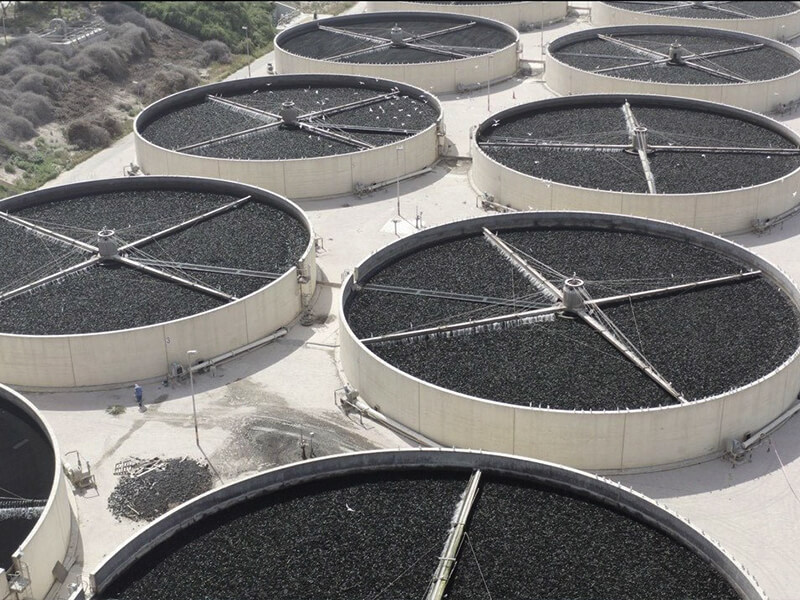
The biological or gravel filter is a basin containing a fixed, non-gradient scale of gravel. The water passes through the pores where bacteria adhere to the gravel (filtration media).
Biofilms, the layers of bacteria adhered to the outer parts of the gravel, absorb and decompose the organic substances present in the wastewater.
As aerobic bacteria grow and multiply, the thickness of the biofilm increases, leading to oxygen consumption before reaching the inside of the membrane. This creates an anaerobic environment close to the surface of the gravel.
The increasing thickness of the biofilm results in the consumption of organic materials before reaching the bacteria near the surface of the gravel.
As a result, these bacteria reach the stage of death, lose their ability to adhere, fall with the liquid, and then begin to form another layer of biofilm, continuing the cycle.
Gravel Tank Features:
Filtration Medium: Gravel
Surface Loading Rate (m3/m2/day): 4-10
Organic Loading Rate (kg BOD/m3/day): 0.24-0.48
Return Rate (%): 0 : 100
Depth of Filtration Material (m): 1.8-2.4
Removal Rate of Organic Matter (BOD): 50-80
Advantages:
Easy and Simple Operation:
Flexible Design:
No Aeration Equipment Needed:
Suitable for Small Capacities:
Lower Sludge Production:
Lower Electrical Power Requirement:
No Skilled Labor Required:
Nitrification without Increased Aeration Rates:
Defects:
Not Suitable for Large Capacities:
Not suitable for plants with large capacities or systems.
Limited Flexibility:
Limited flexibility in converting the treatment system to alternative equivalents such as activated sludge systems.
Odor and Fly Issues:
May result in the spread of odors around the station and the spread of flies. High-quality primary treatment is required to prevent early blockage.
Return Pump Necessity:
The need to create return pumps to mix treated water with raw material before entering the asphalt filter to reduce loads.
Possibility of Clogging:
The possibility of clogging parts of the filter, requiring the stoppage of the filter, cleaning the medium, and re-brushing it.
Standards Compliance Issues:
Sometimes, a finished product that meets standards may not be obtained, requiring supplementation of biological treatment with an activated sludge system.