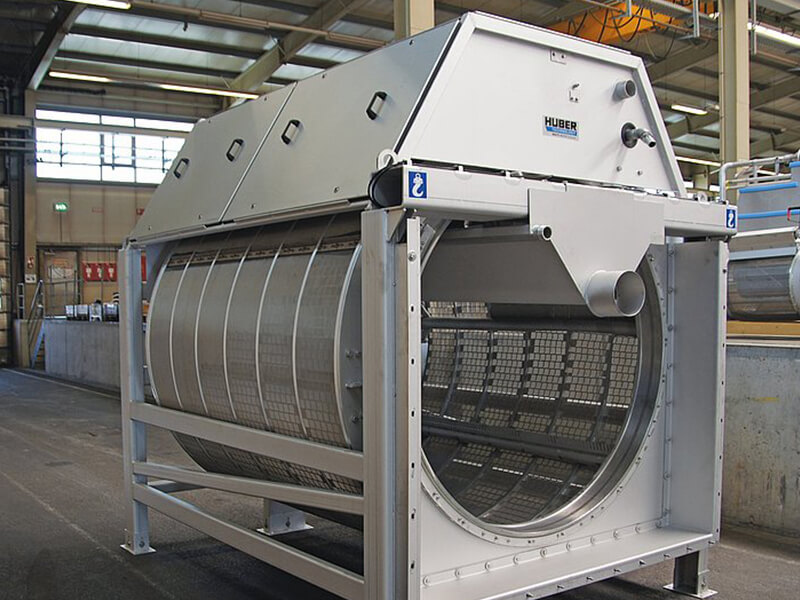
The diameter of the rotating drum affects the screen’s capacity and efficiency.
Opening Size: The size of openings in the drum determines the particles that can pass through.
Rotation Speed: The speed at which the drum rotates influences the lifting and discharge of captured solids.
Design and Construction
Material:
Screens are typically constructed from materials like stainless steel, which offers corrosion resistance.
Frame Structure:
The frame provides support for the screen structure and ensures stability during operation.
Drive Mechanism:
Mechanical screens are equipped with a drive mechanism, such as an electric motor, to power the movement of the screen elements.
Operation and Automation:
Automatic Cleaning:
Mechanical screens are designed for automatic or semi-automatic cleaning to prevent clogging.
Scrapers or Brushes:
The screen may use mechanical scrapers or brushes to remove debris from the surface.
Control System:
Automated control systems govern the operation of mechanical screens, including cleaning cycles and maintenance alerts.
Installation and Configuration:
Inlet Configuration:
Mechanical screens are typically installed at the inlet of water treatment facilities, positioned to intercept and capture debris as water enters the treatment process.
Screen Configuration:
Screens may be installed horizontally or vertically based on space constraints and the specific requirements of the water treatment plant.